
Production kitchens
Overhead pipes, conduit, vent faces, light housings, cooler tops, and structural ledges are cleaned with food-contact surfaces and movable equipment protected.
Serving Oklahoma City, Oklahoma & surrounding areas
Remove overhead grease, dust, and loose debris with a cleaning plan built around your kitchen layout, operating hours, and access requirements.
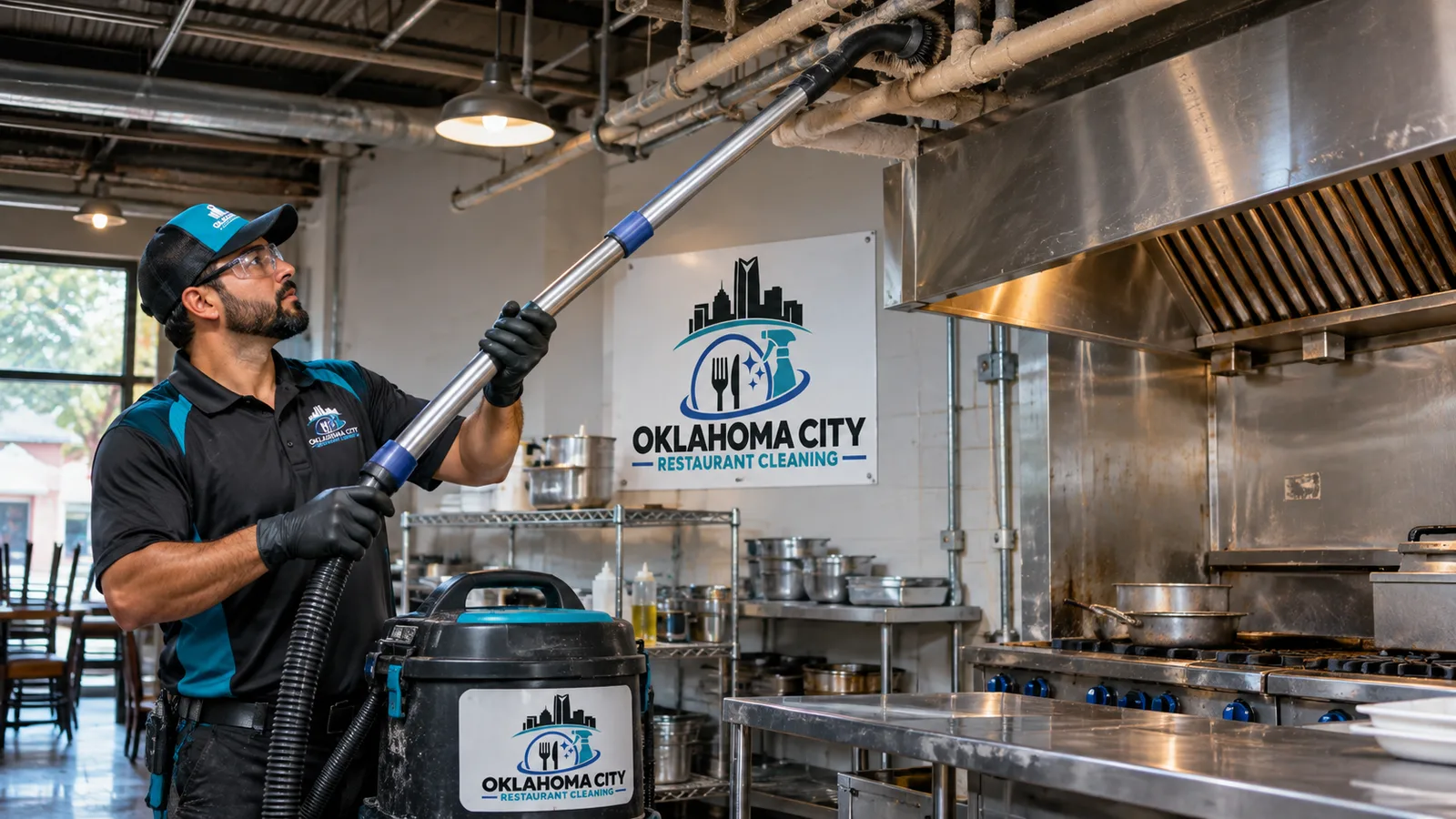
Restaurant High Dusting Bethany addresses buildup on surfaces that routine wiping and floor care cannot reach. Exposed rafters, ceiling ledges, conduit, pipes, duct exteriors, suspended fixtures, vents, and the tops of coolers can collect dust mixed with airborne grease.
Once disturbed by vibration or airflow, that residue may fall toward food preparation and storage areas.
Oklahoma City Restaurant Cleaning approaches this work as a professional restaurant company in Oklahoma City, with the scope based on what is actually overhead and how the kitchen operates. Bethany restaurants along busy commercial corridors may deal with frequent deliveries, steady traffic, and little room to interrupt production. We plan access, containment, equipment placement, and cleanup before work begins so the crew can clean methodically around fixed equipment.
High dusting supports regular Restaurant Kitchen Cleaning Bethany work, but it has a distinct purpose. Standard kitchen cleaning usually concentrates on reachable equipment exteriors, walls, floors, and preparation surfaces. High dusting targets elevated areas that require extension tools, ladders, or specialized vacuum equipment. It does not replace professional exhaust-system cleaning, internal duct cleaning, pest control, or repairs.
Each scope starts with an inspection of the dining, service, storage, and kitchen areas included in the job. Common targets include exposed ceiling structures, beams, sprinkler-pipe exteriors, electrical conduit, cable trays, wall tops, supply and return vent faces, light housings, ceiling fans, signs, shelving tops, and accessible duct exteriors. Crews can also address dust on the tops of walk-in boxes, reach-in coolers, cabinets, and other fixed equipment when access is safe.
HEPA-filtered vacuums and extension poles help capture loose material at the source instead of pushing it into the room. Where residue has bonded to a washable surface, the crew may use controlled damp wiping or an appropriate degreasing product after checking the surface. Dry methods are generally preferred around electrical components and other moisture-sensitive areas.
Kitchen exhaust hoods, grease filters, fans, and duct interiors require separate methods and may fall under fire-safety inspection or cleaning requirements. During the walkthrough, we identify boundaries clearly so managers know which surfaces are included and which need another qualified trade.
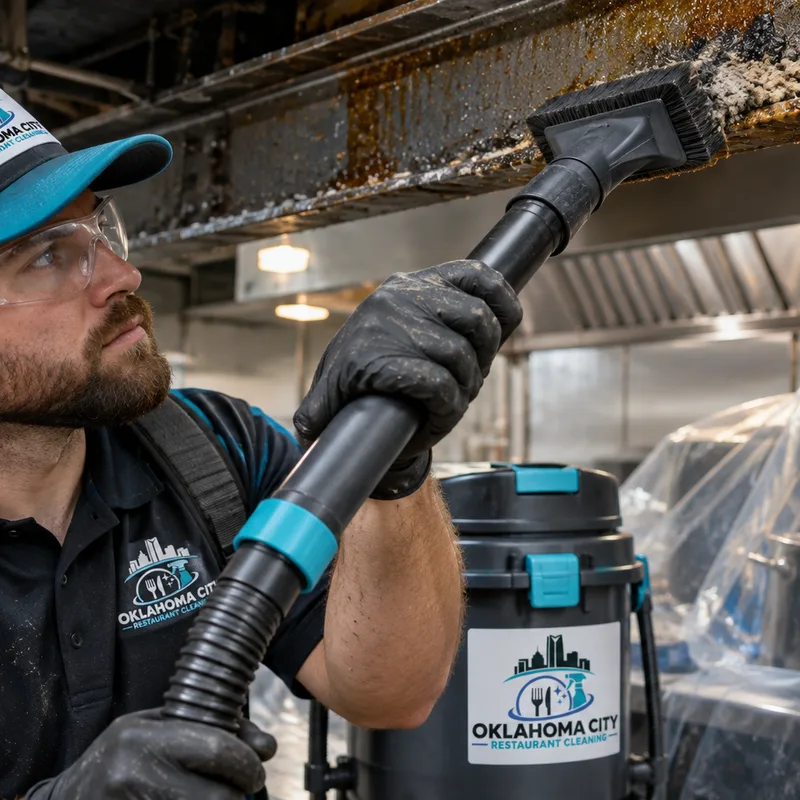
Overhead pipes, conduit, vent faces, light housings, cooler tops, and structural ledges are cleaned with food-contact surfaces and movable equipment protected.
Exposed ceilings, decorative ledges, fans, signs, and high fixtures can be included when dust is visible to guests or may drift into service areas.
Shelf tops, wall ledges, utility lines, and accessible structures are addressed without treating food, packaging, or inventory as cleaning surfaces.
Ceiling height, narrow aisles, fixed cooking lines, hanging fixtures, and safe ladder placement are reviewed before the work is scheduled.
Step 1 of 5
We review the rooms, ceiling construction, residue level, sensitive equipment, access points, and operating schedule. The written scope identifies the surfaces to be cleaned and any exclusions.
Step 2 of 5
Food and exposed utensils must be removed or secured. The crew coordinates equipment shutdowns when required, protects preparation surfaces, places containment, and establishes safe access.
Step 3 of 5
Technicians begin at the highest accessible surfaces and work downward. HEPA vacuuming, microfiber tools, and controlled damp cleaning are selected according to the residue and surface material.
Step 4 of 5
After overhead work, the crew cleans affected lower surfaces and floors within the agreed work zone. Protective materials and collected debris are removed before the area is released.
Step 5 of 5
The final walkthrough checks the included surfaces, identifies areas blocked by permanent equipment, and documents any conditions that may require maintenance or another specialist.
Bethany sits within the Oklahoma City metropolitan area and has restaurants in compact commercial spaces as well as freestanding buildings. A smaller kitchen may present more access difficulty than a large one because cooking lines, coolers, and storage racks leave fewer safe positions for ladders and extension equipment. That condition affects labor and scheduling even when the floor area is modest.
Oklahoma weather also brings wind and seasonal pollen that can add dry material near entrances, rooftop air intakes, and exposed interior structures. In a cooking environment, airborne oil can bind that material to overhead surfaces. The resulting film often needs more than a dry duster, especially near fryers, ranges, and pass-through areas.
Work is commonly planned outside production hours or during a scheduled closure window. Managers should allow time for setup and final recovery, not solely the overhead cleaning itself. If the kitchen remains active around the work zone, the available cleaning methods and access may be restricted. We discuss those limitations before scheduling rather than improvising around open food or hot equipment.
A practical cleaning plan separates daily work, periodic deep cleaning, and specialized maintenance. Staff may be able to inspect visible ledges during routine closing duties, but elevated structures usually need scheduled attention. The right interval depends on cooking volume, fuel and equipment type, ceiling design, ventilation, and how quickly residue returns. A kitchen with exposed structure near a fryer line will have a different need than a dining room with a smooth suspended ceiling.
High dusting should be coordinated with lower-level cleaning because some fine material may settle despite containment and source capture. Scheduling overhead work before detailed cleaning of equipment exteriors and floors avoids redoing completed work. Food-contact surfaces still need to be cleaned and sanitized using the restaurant's established procedures before production resumes.
Managers can help by identifying alarm devices, fragile fixtures, leaking lines, loose ceiling material, and equipment that cannot be moved. Cleaning crews should not adjust sprinkler components, open electrical enclosures, or disturb suspect building materials. Those conditions require the appropriate contractor or building professional.
Removing accumulated dust and grease reduces the loose material available to fall onto equipment, storage, floors, and preparation zones.
Clean pipes, ledges, and structural surfaces make it easier to notice leaks, corrosion, damaged finishes, or new residue during routine facility checks.
Loose dust, greasy film, and moisture-sensitive components should not all be treated alike. The crew selects tools and products for the actual surface condition.
A walkthrough establishes access, shutdown needs, protection measures, and the likely work window before technicians arrive.
Get a written high-dusting scope based on your ceiling height, kitchen layout, residue level, and available closure window.
Call for a Free QuoteRestaurant high-dusting prices are usually based on labor, access, and condition rather than a simple floor-area rate. Ceiling height, greasy versus dry residue, ladder or lift requirements, occupied work zones, and the amount of protection all affect the quote. A compact Bethany kitchen with tightly packed equipment may require more setup than a larger open room. The exact price is confirmed after the included surfaces and access conditions are inspected.
High dusting is generally best scheduled when food production and guest service have stopped. Overhead work can release dust, requires equipment around active work areas, and may involve temporary protection or shutdowns. A limited isolated area may sometimes be cleaned while another part of the facility operates, but that depends on separation, airflow, access, and restaurant policy.
The work may take several hours or require more than one service window, depending on ceiling height, room count, residue, and access. Setup and cleanup are part of the schedule. Restaurants with exposed rafters, dense utility lines, or equipment that cannot be moved generally take longer than open rooms with reachable ledges.
High dusting does not normally include cleaning grease from the interior of exhaust hoods, fans, or ductwork. Those components require specialized access and procedures. High dusting may include accessible exterior surfaces when they are listed in the scope, but the boundaries should be confirmed during the inspection.
The restaurant should remove or secure exposed food, utensils, disposable packaging, and movable items in the work zone. Managers should identify equipment that cannot be shut down, restricted electrical areas, fragile fixtures, and alarm-system concerns. The crew will explain which surfaces need covering and whether any aisles or rooms must remain closed.
The interval should be based on inspection findings and how quickly residue returns. Cooking volume, fryer use, ventilation performance, exposed ceiling construction, and outside dust all affect the cycle. Regular visual checks of beams, pipe tops, vent faces, and cooler tops provide better guidance than choosing an arbitrary calendar date.
High dusting can be coordinated with broader kitchen cleaning when the work order clearly separates overhead surfaces, lower-level cleaning, and any excluded specialty systems. Performing elevated work first is usually more efficient because the crew can recover settled material during the later cleaning stages. The final plan should account for food-surface cleaning and sanitizing before reopening.
Describe the overhead surfaces, ceiling height, access limits, and preferred work window. Oklahoma City Restaurant Cleaning will use those details to prepare a clear scope for your facility.