Restaurant cleaning · Oklahoma City

Restaurant Cleaning Services in Oklahoma City

Detailed cleaning for dining rooms, bars, restrooms, floors and back areas, scheduled around service so your restaurant is ready when guests arrive.

Written cleaning scope
Scheduled around service
Guest and back areas
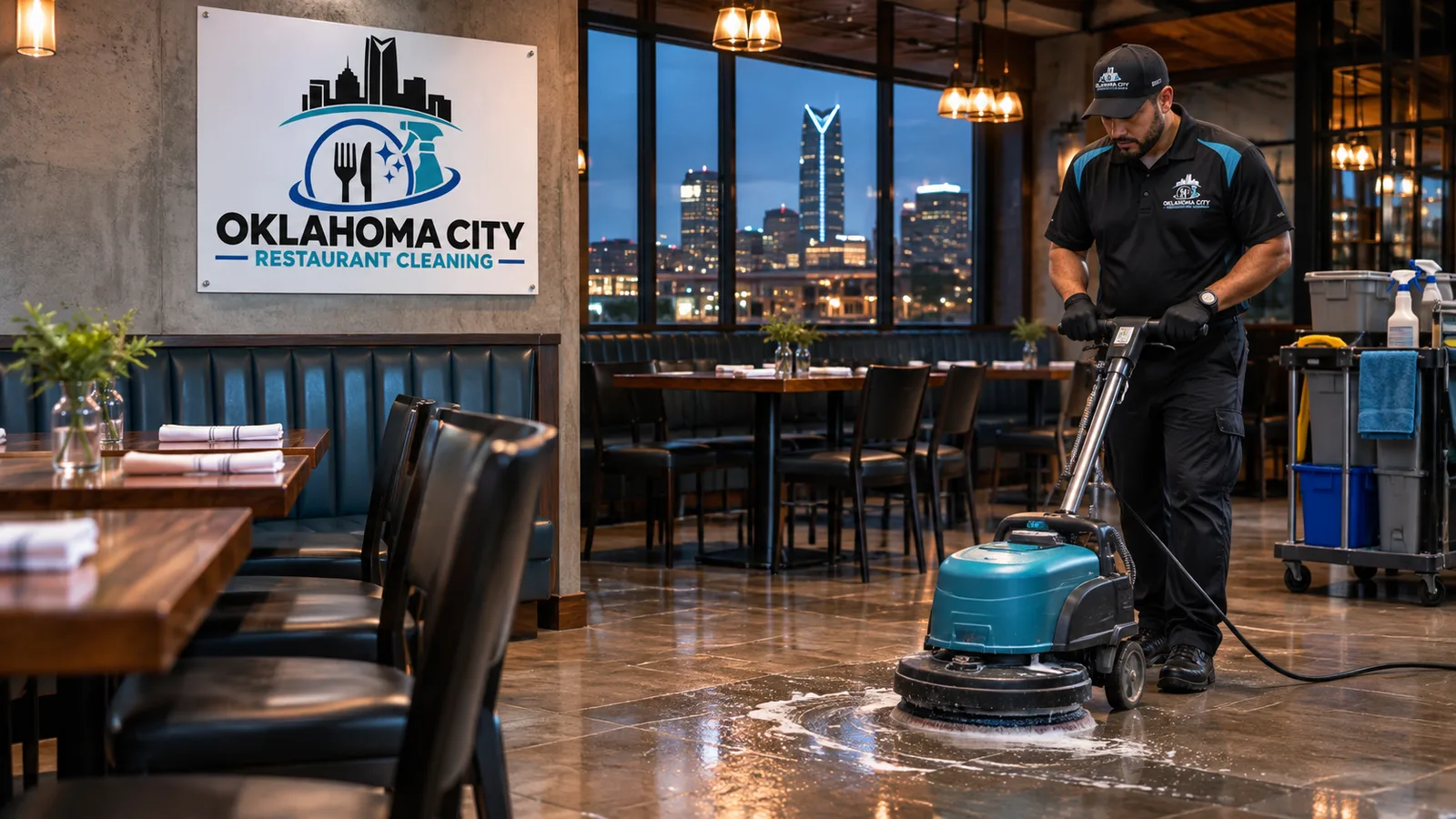
Cleaning professional using commercial equipment on a restaurant dining room floor after closing
Operational planning

Reliable Cleaning Built Around Restaurant Operations

Restaurant Cleaning Services should support the way your operation runs, not disrupt it. Oklahoma City Restaurant Cleaning handles guest-facing and back-area cleaning on a recurring or scheduled basis, with the scope set around your floor plan, hours, traffic and problem areas.

Our team works as restaurant specialists serving Oklahoma City, OK, building practical cleaning plans for independent restaurants, bars and multi-area food-service spaces. The plan can cover front of house cleaning, dining areas, restrooms, floors, bar surfaces and selected back-of-house areas. Tasks, frequency and access instructions are documented before routine work begins.

Local conditions matter. Wind can carry dust and grit into entrances, while rain and severe-weather days can leave tracked soil near doors and service paths. Restaurants near the pedestrian activity of Bricktown may need close attention at entrances and restrooms. Automobile Alley dining spaces often combine street-facing glass, hard floors and compact layouts, while larger suburban locations around Memorial Road may have wider dining rooms and more floor area. The cleaning schedule should match those operating conditions rather than rely on a generic checklist.

Complete restaurant scope

Restaurant Cleaning Services for Every Major Area

Front of House Cleaning

Guest-facing work can include entry glass, host stands, waiting areas, ledges, partitions and touchpoints. Restaurant front of house cleaning in Oklahoma City is planned for the period before opening or after guests leave so staff can set the room without working around cleaners.

Restaurant Dining Room Cleaning

Dining area cleaning addresses tables, chair backs, booth seating, baseboards, window sills and visible soil around furniture legs. We account for movable furniture, fixed booths and the crumbs and spills that collect along edges.

Restaurant Floor Cleaning

Floor care starts with the flooring material. Vacuuming suits carpet and entrance mats, while sweeping, damp mopping or machine scrubbing may suit resilient tile and other compatible hard floors. The correct chemistry and dilution help avoid sticky residue.

Restaurant Restroom Cleaning

Restroom service can cover toilets, urinals, sinks, mirrors, partitions, dispensers, floors and high-touch hardware. Restaurant restroom cleaning in Oklahoma City can be assigned more frequently where operating hours and guest volume create heavier use.

Restaurant Bar Cleaning

Bar cleaning can address accessible counters, stools, rails, footrests, exterior equipment surfaces and the floor around service stations. Food, glassware and bartender tools should be removed or secured before cleaning begins.

Back of House Cleaning

Restaurant back of house cleaning in Oklahoma City may include employee areas, corridors, storage-room floors and accessible exterior equipment surfaces. The written scope separates routine janitorial work from specialized hood, duct and internal equipment cleaning.

Elevated detail work

High Dusting and Detail Work That Routine Wiping Misses

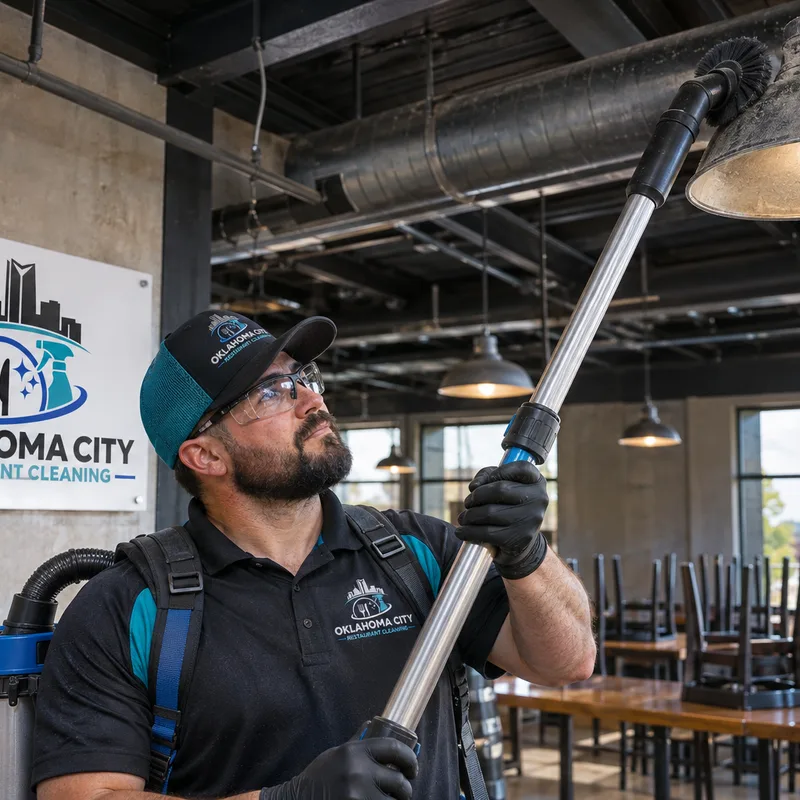
High dusting targets accessible, elevated surfaces where airborne dust settles: the tops of partitions, exposed pipes, vents, beams, light housings and ledges. These areas should be identified during the initial walk-through because ceiling height, surface type and safe access affect the method and schedule.

A high-dusting visit usually starts before lower surfaces and floors are cleaned. This top-down sequence captures fallen debris during the remaining work instead of dropping it onto a finished dining room. Extension tools and HEPA-filtered vacuums may be used where appropriate. Greasy deposits require a compatible degreaser and more controlled wiping than loose dust.

High dusting is commonly scheduled less often than daily touchpoint or floor service, but the right interval depends on exposed ceilings, air movement and cooking residue. Any work near active food preparation must be coordinated so food, utensils and clean service items are protected.

Restaurant cleaning professional removing dust from overhead pipes and light housings with an extension vacuum tool
Top-down cleaning removes elevated dust before lower surfaces and floors are finished.
Organized service plan

How We Build and Maintain Your Cleaning Plan

  1. Step 1 of 5

    Walk Through the Restaurant

    We review the dining room, bar, restrooms, entrances, flooring and agreed back areas. The walk-through identifies surface materials, access limits, recurring soil and any equipment that must remain untouched.

  2. Step 2 of 5

    Define Tasks and Frequency

    The written scope separates every-service tasks from periodic work such as high dusting, edge detailing or machine floor cleaning. It also records arrival windows, alarm or key procedures and the person responsible for approving changes.

  3. Step 3 of 5

    Prepare the Space

    Restaurant staff secure food and valuables, clear agreed surfaces and identify spills or damaged areas needing attention. Cleaners place warning signs and use color-coded cloths or tools to reduce cross-contact between restroom and dining-area work.

  4. Step 4 of 5

    Clean in a Controlled Order

    Work generally progresses from cleaner areas toward dirtier areas and from high surfaces down to floors. Restroom tools remain separate, and chemicals are used according to their labels, including required dilution and dwell time.

  5. Step 5 of 5

    Inspect and Adjust

    Completed areas are checked for missed debris, residue and floor hazards. If service hours, furniture layouts or guest traffic change, the scope can be revised instead of leaving the crew to make assumptions.

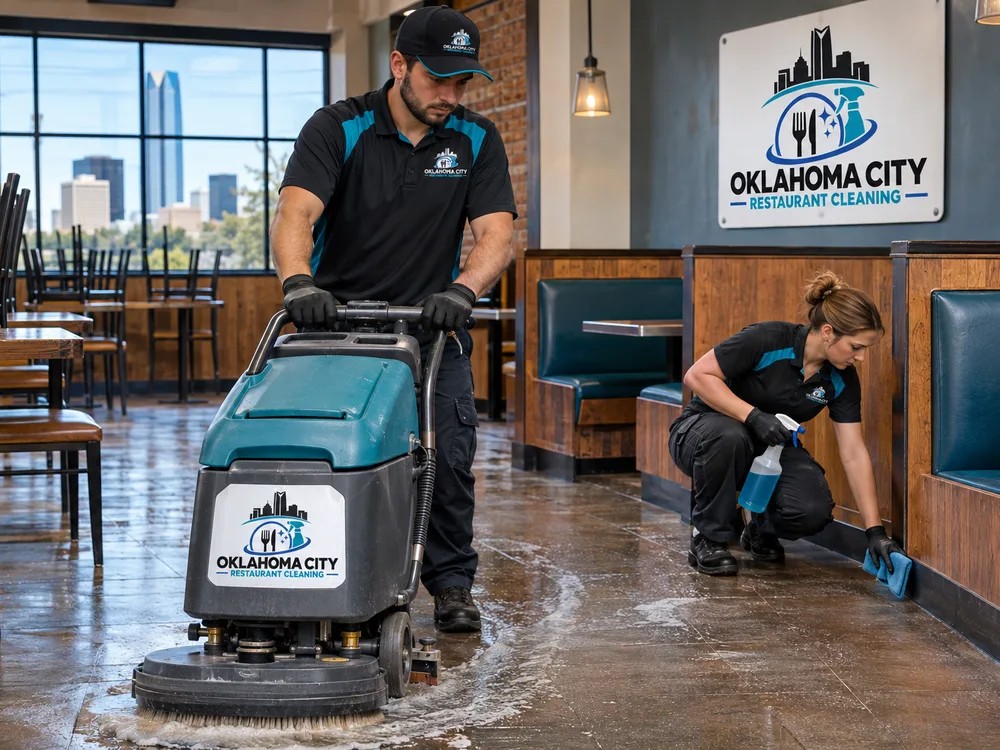
Worker operating a commercial floor scrubber while another worker details floor edges near restaurant booths
Machine cleaning and hand detailing address open floor areas, edges and furniture lines.
Surface-specific floor care

Restaurant Floor Cleaning Based on Material and Soil

Restaurant floors collect tracked grit, drink spills, food particles and oily residue. Using one process throughout the building can leave some surfaces dull, sticky or unsafe. The cleaning method must fit both the material and the type of soil.

Routine care may include vacuuming mats and carpet, sweeping hard floors, cleaning edges, and damp mopping with measured chemical dilution. Where compatible, periodic auto-scrubbing can remove embedded soil across larger open areas. Corners, transitions, under-table zones and the edges of fixed booths still need hand detailing because floor machines cannot reach them.

A site review should identify resilient tile, sealed concrete, ceramic tile, grout, carpet and other finishes before chemicals or equipment are selected. Entrance zones often need added attention after Oklahoma wind or rain brings in fine dirt and moisture. Wet-floor signs and controlled access remain in place until the surface is ready for foot traffic.

Defined responsibilities

What a Clear Restaurant Cleaning Scope Should Include

A useful proposal names the rooms, tasks and frequency rather than promising a broadly “clean” restaurant. It should state which tables, booths and bar surfaces are included; whether chairs are moved; how restrooms are handled; and which back areas are accessible. Periodic work, supply responsibilities and exclusions should also be recorded.

Food-contact surfaces require special care. Cleaning removes soil, while sanitizing is a separate step that uses an appropriate product on a pre-cleaned surface for its labeled contact time. Restaurant management remains responsible for identifying food-contact surfaces and confirming that products and procedures fit the establishment's food-safety plan. Chemicals should never be mixed or transferred into unlabeled containers.

Routine janitorial service is also different from commercial kitchen exhaust-system cleaning. Hood interiors, filters, ducts, fans, grease traps, pest treatment, hazardous-material cleanup and internal appliance cleaning require separate scopes or qualified specialty providers. Stating those boundaries protects your staff, property and cleaning crew.

Before work starts, confirm service windows, lock-up procedures, chemical restrictions, storage access and how concerns will be reported. Oklahoma City Restaurant Cleaning can then prepare a written plan that reflects the actual rooms and surfaces in your operation.
Get a written restaurant cleaning scope based on your hours, floor plan, surface materials and highest-priority areas.

Call for a Free Quote
Common questions

Questions About Restaurant Cleaning in Oklahoma City

How much do restaurant cleaning services cost in Oklahoma City?

Restaurant cleaning is usually priced after a walk-through because square footage alone does not show the full workload. Dining capacity, floor materials, restroom count, soil level, furniture movement, service frequency, access hours and high-dusting needs all affect the quote. A compact counter-service operation and a large restaurant with a bar require different labor and equipment. The exact price is confirmed in a written scope after the restaurant is inspected.

Can cleaning be scheduled after closing or before opening?

Yes, restaurant cleaning can usually be arranged outside guest-service hours, subject to crew availability and the time needed for the agreed work. The plan should account for kitchen close-down, bartender duties, alarm procedures and the time floors need to dry. Bricktown restaurants with late operating hours, for example, may need a different arrival window than breakfast-focused operations.

How often should a restaurant dining room be professionally cleaned?

The right frequency depends on traffic, operating hours, floor type and what employees already clean during service. Floors, restrooms and touchpoints may need attention every service visit, while baseboards, chair legs and high surfaces can follow a periodic rotation. A walk-through sets a practical schedule for each task rather than assigning one interval to the whole restaurant.

Do you clean restaurant bars and back-of-house areas?

Yes, restaurant bar cleaning and agreed back-of-house cleaning can be included in the written scope. Accessible counters, stool bases, exterior equipment surfaces, corridors, employee areas and compatible floors may be covered. Food, glassware and loose tools must be secured, and specialized work such as internal equipment cleaning, grease-trap service and exhaust-duct cleaning is excluded unless separately arranged with a qualified provider.

Is high dusting included with routine restaurant cleaning?

High dusting can be included as a periodic task, but it should be listed separately from routine wiping and floor care. Ceiling height, exposed ductwork, grease residue and safe access determine the method and timing. It is completed before lower surfaces so displaced dust can be removed during the rest of the service.

Can you clean while restaurant employees are still working?

Some limited work may be completed while employees are present, but guest areas and wet floor work are safer and more efficient when traffic is restricted. The service plan identifies occupied zones, food-preparation boundaries and approved access times. Staff should secure food and point out any active hazards before the cleaning crew begins.

What should we prepare before the first cleaning visit?

Secure food, cash, glassware and personal items, then clear the surfaces included in the scope. Provide current access instructions, alarm procedures, chemical restrictions and a contact for on-site decisions. The initial walk-through at your Oklahoma City restaurant should also identify damaged flooring, loose fixtures and equipment that cleaners must avoid.

Do restaurant cleaning services include sanitizing food-contact surfaces?

Sanitizing food-contact surfaces is included only when it is expressly named in the scope and an appropriate product and procedure have been approved. The surface must first be cleaned, and the sanitizer needs its labeled concentration and contact time. Restaurant management should identify these surfaces and confirm that the process matches the establishment's food-safety requirements.

Put a Clear Restaurant Cleaning Plan in Place

Tell Oklahoma City Restaurant Cleaning about your operating hours, dining areas, restrooms, floors, bar and back-area needs. We will review the space and define a practical scope before routine work begins.